or
a long term investment in the "greenest" jewel of the Caribbean, take a
look at the little known island called the Commonwealth of Dominica.
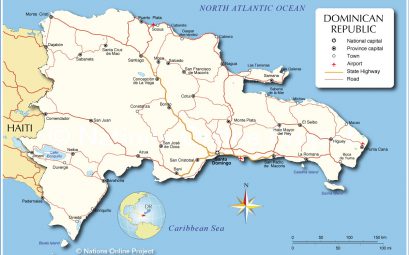
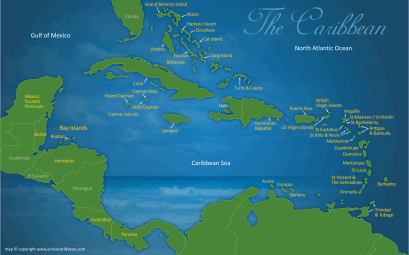
Half way along
the curved necklace of islands comprising the Windward Islands of the Eastern
Caribbean basks a mountainous rock of 290 sq miles (750 sq km). At
longitude 61º 20W, and latitude 15º 25N, Dominica is a land of
steep mountains and cliffs plummeting straight into the blue Caribbean
sea on the western side and the grey Atlantic on the eastern. Rising
at the highest point to Mt. Diablotin at 4,747 ft. (1,447m), this is a
country of raw beauty, rugged headlands and moody mountains, their peaks
often buried in cloud.
Originally
from the UK, but having lived, cruised and built businesses in the Caribbean
over the last two decades, my husband and I always hoped to be able to
make a home in Dominica when the time was right.
The main attractions?...
its untamed, unspoiled tropical countryside, the Dominican people's natural
pride and understanding of environmental stewardship and the chance to
be a part of that heritage. (Example:http://whc.unesco.org/pg.cfm?
The reason
it took so long?....formerly it has not been easy to make a living in Dominica,
but things are changing. Improved infrastructure and communications,
a stable government and support from external organizations are contributing
to making the country attractive to outside investment.
Now that the
time is here, we are overwhelmed with choices. The question is what do
we want to do? Build a home for our family, or develop a tourist
accommodation project, or both? We thought we would keep an
open mind, and explore the possibilities.
We worked through
www.caribbeanlandandproperty.com
and were shown a wide range of available land by Paul Blanchard who is
based in the Roseau area. He is one of the very few professional real estate
agents on the island who has both experience and qualifications.
Roseau is the
capital of Dominica. Small, charming, dilapidated, the heart of Roseau
beats with a pure Caribbean rhythm. On every street corner is a vendor
selling fresh fruit, vegetables or home made snacks. The narrow,
hot streets look unbendingly down towards the seafront, and the cruise
ship dock which is neighbour to a large marketplace selling local produce
and fish in a noisy, colourful, smelly atmosphere.
There is not
a great deal of property for sale in Dominica. The majority of existing
construction tends to be small and though charming, is in need of modernizing,
strengthening and bringing up to standard. There are a few large
houses for sale, and also some resorts and hotels, either half built or
a casualty of insufficient guests. So most of what we looked at was
land.
Rainforest
Retreat
High in the
rain forest, lush, green and teeming with wildlife, beside a busy hiker's
trail we see a piece of real estate which is ripe for sensitive development
as a "rainforest rest and retreat". Treetop cabins, a shop, even an exhibition
centre for the surrounding trails with an emphasis on eco-tourism would
be just the perfect development. Alternatively it would make a quiet
cool rainforest home, for those seeking a hideaway. |
|
| Deb Andrews is with Caribbean
Land & Property - a company that has a very wide range of Caribbean
properties including single family homes, raw land, plots, lots, fine vacation
homes, commercial & investment properties as well as beachfront land
- Caribbean Land & Property has real estate across the Caribbean -
Since this article was written Deb Andrews has become the editor of the
Caribbean Property & Lifestyles Magazine - she can can be reached by
clicking here |
|
|
.
.
|
The Caribbean Property List has current
Real Estate Listings on the Island of Dominica - The Nature Island
|
|
|
| Offshore
Telecommuting - How to Avoid Taxes and Live the Life of your DreamsThis
dynamic Report is essential reading for anybody interested in the
opportunities that telecommuting, and in particular overseas telecommuting
can offer. Earning a living whilst living on an idylic Caribbean Island
or in a Beachfront Tropical Nation is for many of us the ultimate dream
This
Report will show you how you could actually go about translating this dream
into a reality. |
|
|
|
This is approximately
8 acres of land, at around $35,000 an acre, of steeply sloping rainforest
which bounds the hiking trail going straight up to Morne Trois Pitons at
4,550 ft. This land at its southern boundary abuts the National Park
Rainforest and the World Heritage Site which includes one of only two only
''boiling lakes” in the world. Throughout the year, hikers from all
over the world toil up and down this trail into the National Park.
The land can
be broken up into smaller lots, most of them with running water, as there
are a number of small streams and ridges crossing the site. It lies
just 5 minutes from the central roundabout on which all the main roads
of the country meet, about 20 minutes from Roseau and an hour from the
main airport at Melville Hall.
Layou Valley
View
|
"There
are 12 acres available at around $25,000 an acre"
|
Another piece
of land we view nearby, is a sloping site on a mountain side, and which
has not yet been fully surveyed. The hillside faces north west and is at
a height of well above 1500ft, the views across the valley are stunning,
and include the Layou Valley Ravine. Although the land is central on the
island, it is possible to see the Caribbean sea through the valleys.
The air is cool and there is a rain shower most days, making this the most
lush part of the "nature" island.
A well established
track with mature flowering shrubs and trees render this site easily accessible
for development, with utilities close by on the main road at the highest
point of the land. There are 12 acres available at around $25,000
an acre.
|
Formerly
it has not been easy to make a living in Dominica, but things are changing.
Improved infrastructure and communications, a stable government and support
from external organizations are contributing to making the country attractive
to outside investment -
|
|
|
River Sounds
Further down
the mountain range, is a 2.2 acre piece of prime rainforest, one
third of it bounded by the Massacre river. The river water is drinkable.
There are so many possiblities for this chunk of real estate, that the
imagination runs wild! Only a few miles from the World Heritage Site at
Morne Trois Pitons, the rain forest here includes amongst others, huge
mahogany trees, ylang ylang and bamboo in abundance. The land is
centrally situated in a sloping valley overlooking Roseau with steep rainforest
hills on either side, and is cool and breezy with access via a beautiful
wide planted driveway. The rainforest visible teams with birds, butterflies,
moths and geckoes.
At the end
of the driveway is a large concrete structure, including foundations, pillars
and floors of over 10,000 sq feet. It has three levels, the highest being
in the treetops and revealing spectacular views of both the ocean and a
birds eye view of the surrounding wildlife. This appears to have been constructed
to a very high standard. As an unfinished construction, it would
lend itself to completion in a number of different uses, one of the most
sympathetic being a wellness, yoga or spa centre. The proximity of the
cool fresh mountain river, is an important factor in the use of this site
and adds considerable value.
Although there
are no visible neighbours, the site itself is within 10 minutes drive of
the capital of Dominica, Roseau, and is 10-20 minutes drive from some of
the most spectacular walks, rambles and climbs in the Caribbean, with mountains
of over 4,500 feet, and a waterfall for every day of the year. There
are also hot sulphur springs for healthy bathing within 20 minutes drive.
Additional
acres are available at the lower boundary for purchase if needed.The current
owner is looking for a buyer who will use the site sympathetically whilst
enjoying and improving the rainforest and the river, current asking price
is negotiable at $325,000.
Atlantic
Hills
On
the north east side of Dominica, there is an area of gently sloping land,
striated by ridges and ravines, and which runs down to the Atlantic from
the high slopes of Morne Diablotin. This has been cultivated for centuries
and much of it was banana plantation. There are some interesting pieces
of real estate for sale along these slopes. A four acre south facing slope
which begins on an east/west ridge, this land is currently a banana, mango,
plantation above the seaside tourist village of Calibishie. This
land goes for around $35,000 per acre.
We walk down
a driveable track along the ridge which bounds the north side of the land
and cool our feet in a stream which runs continuously at the southern boundary.
There are other mature trees besides the banana and mango, including breadnut,
avocado and coconut palms. This is an excellent site for a home and
a guest cottage at the top, with gardens and some agricultural useage on
the lower more steeply sloped area.
We can see
the ocean and the islands of Guadelope, Les Saintes and Marie Galante from
the high part of the land. Cool breezes blow up from the ocean.
The highest mountain in Dominica, Morne Diablotin and surrounding peaks
are clearly visible, and there are many spectacular walks and rambles in
the area. The area boasts some spectacular coastline, with stunning
headlands of sea grape trees and red rock, tiny bays, and a number of famous
beaches.
Currently this
is an agricultural area but some surrounding sites have already been sold
to expatriates and this area will become very sought after.
There are many
local small holding farmers and their families in the surrounding area
available to caretake the property and gardens during an owners absence.
As we wander further along the track, farmers greet us and shake our hands.
“Welcome” they say, “When are you moving in?”
Windswept
Beach
We wonder about
beach properties. They are available, although harder to find. Being
low down, they tend to be hotter, but on the Atlantic side there is almost
always a sea breeze. A 2 acre site on the east coast, close to Wesley and
10 minutes from the Melville Hall Airport was one that we look at.
It reminded us of the rugged coast of Cornwall. The windward coastline
of Dominica is wild and windswept, interspersed with beautiful protected
bays and sandy beaches. Where there are no reefs or bays, the coastline
is fully exposed to the power of the Atlantic Ocean. This particular site
is situated at sea level and takes full advantage of the rocky coastline.
There is a small bay to one side, which on calm days could be used for
swimming. The track to the site is driveable and the area is cleared
for construction.
There are views
to the mountains behind and the area is bounded by mature sea grape and
coconut trees.
The People
Dominicans
are amongst the kindest and friendliest of all the Caribbean peoples.
We work in the region with Caribbeans from every nation, and many of them
are a joy to know, but most of our long term friendships have been formed
with Dominicans.
These people
have a resourcefulness and a confidence that is quite rare here. This is
best illustrated in the fact that the island is counted as one of the poorest
of the Eastern Caribbean countries, and yet the abundant natural resources,
national pride for both Dominicans and Carib Indians, festivals, music,
culture, environment, diversity of language and life longevity (second
in the world) make this a rich nation indeed!
Dominicans
speak English and a Creole which is a mix of French, Spanish and English.
Education is based on the old British system, and is both rigorous and
thorough. Whilst other countries, including Britain have diluted the old
system, Dominica maintains an excellent standard. We have yet to meet an
inarticulate Dominican!
Natural
Resources
Dominica overflows
with natural resources. The high rainfall in the mountain area has created
the famous 'boiling lake', which only remains a lake because more rainwater
falls and is captured than can be boiled off by the volcanic heat trapped
in the mountain.
In 1997 Unesco
confirmed Morne Trois Pitons National Park as a World Heritage Site.
"Luxuriant
natural tropical forest blends with volcanic features of high scenic appeal
and scientific interest in this national park centered on the 1,342 m high
volcano bearing the name of Morne Trois Pitons. With its precipitous slopes
and deeply-incised valleys, fifty fumaroles and hot springs, freshwater
lakes, a "boiling lake" and five volcanoes, located on the nearly 7,000-hectare
park, together with the richest biodiversity in the Lesser Antilles, Morne
Trois Pitons National Park presents a rare combination of natural features
of World Heritage value." (Ref: http://whc.unesco.org/pg.cfm?cid=31&id_site=814)
Because of
the rainfall the island is verdant throughout, and there is food to be
found growing in such abundance that some of it falls and rots. Breadfruit,
coconut, mangoes, grapefruit, oranges, limes, avocado, cashews, coffee,
cocoa, tannia, bananas, plantains, pawpaw the list is almost endless, grow
throughout the country. More importantly, Dominica can support itself
with food, water and energy, a claim not many small island nations can
make.
This is a gardener’s
paradise. If it’s a plant, it thrives! Some of the worlds most rare tropical
plants are grown in private gardens here including orchids and ferns.
This was the plant nursery for the Garden of Eden!
The Economy
The
history of Dominica over the last thousand years includes a long settlement
by the Carib Indians, followed by successions of Spanish, English and French.
Dominica has
the only Carib Indian reservation in the Eastern Caribbean, which proudly
maintains a complete and separate social and economic culture, lead by
a Chief and a Council of Elders.
Somehow the
Carib nation of Dominica survived the bloody onslaught from the Europeans,
the history of whose supremacy is best preserved at the historic Cabrits
National Park, which is an 18th century Garrison built by the British between
1770 and 1815. During its years of dominance the Garrison had over fifty
major structures. Most of the construction was done by the
British but the French made significant additions during their occupation
from 1778 to 1783. At a height of 600 ft, the garrison had a clear view
of some of the major sea battles which were fought between the English
and French during the days of Trafalgar.
During the
next 150 years the "plantation" economy supported the island and became
the framework for the Dominica of today.
Since independence
from Great Britain in November 1978, Dominica has struggled to find a market
and a 'niche' in the international marketplace. The days when the UK was
the chief importer of agricultural goods, have long passed, and for some
years Dominica has continued to maintain the economy with agricultural
and manufacturing exports and tourism. For a while it dabbled
in offering offshore financial services, but with little success.
Ecotourism
Tourism historically
has been limited, due to a number of factors including a general lack of
infrastructure, hotel rooms and a coordinated marketing strategy. But the
potential to increase the level of tourism is huge if a sustainable long
term strategy can be implemented. Certainly, with a little
investment, the current airports have the capacity to increase many times
the number of daily flights, without increasing the size of the planes
or the runways.
Finally, when
ecotourism became an important high end tourist market, Dominica naturally
and with foresight found its niche. It has begun over the last decade
to explore its position as the 'nature' island of the region, and strengthen
its image and brand globally as the 'green' island. This has included
applying for Green Globe 21 Certification http://www.greenglobe21.com/.
The problem with ecotourism is that it implies cheap travel for people
not wishing to use planetary natural resources, and it can create a destination
‘image’ of low cost tourism. It is difficult for Dominica, for many
reasons, to offer cheap holidays and neither should it. Cheap
holidays bring high impact tourism, for which the country has no infrastructure
under its present environmental goals. At present Dominica needs a co-ordinated
sustainable strategy for the long term growth of low-impact ecotourism.
The island
can accommodate many more hotel rooms and good restaurants, and welcomes
and encourages investment from entrepreneurs interested in supporting the
drive for increased ecotourism.
This would
bring in more visitors which would provide much needed employment across
the board, and especially in areas like the Tour Guides. The many
treks and expeditions which are available throughout the island to visitors
are professionally and safely organized through the network of Dominican
Tour Guides. These Guides are all licensed annually by the Government,
and do an excellent job as countryside adventure guides. Their knowledge
of the natural and social history of Dominica is unparalleled, and is learned
through centuries of oral teaching.
Dominica needs
low-impact tourism alternatives, with minimal infrastructure, which could
include:
· second
homes for wealthy Dominicans and expatriates,
· ecotourism
projects based on the Green Globe 21 standards for the global environment,
· niche
market projects which can provide exports such as pure health products
Offshore
Finance
As an Offshore
Financial Centre, Dominica did not have a strong enough strategy or regulatory
body to build a long term financial sector. Although that may well
change in the future, as this area is attracting renewed interest.
Agriculture
Agricultural
exports have slowed to a trickle and are difficult to sustain. For example
the banana and coconut markets are too small to be really viable when up
against the huge might of the south and central American conglomerates.
Those farmers
who still make a living through their banana smallholdings and the local
co-operative, are hostage to the whims of large British supermarkets.
I see a full,
ripe hand of yellow figs (bananas) on the ground, discarded, in the middle
of a plantation. I wonder why? "Run your finger along the skins"
says the owner. I can feel small, almost indiscernible blisters on
them. These bananas were rejected for this alone, although the fruit inside
was perfect and delicious. A small blemish on one banana condemns
the hand, and thus the tree, and thus the farmer's whole crop. The week
we were there, 19 crops were rejected in the Calibishie area, 19 farmers
with small holdings cut down their trees to reuse as fertilizer and were
forced to replant, an 18 month crop cycle.
There are other
possibilities for exporting crops such as, specialist natural health and
beauty products. Some products such as soaps are already produced
by hand, and if well branded and marketed, could become the success story
for future exports.
The local currency
is the Eastern Caribbean Dollar which is fixed against the US dollar.
Recently Dominica
has put in place a successful plan for short and long term sustainable
growth which the IMF is actively supporting. (Ref: http://www.imf.org/external/np/sec/pr/2004/pr04199.htm)
Notwithstanding,
Dominica is currently undergoing a decrease in population. Families, and
especially the young, are leaving the banana plantations and the mountainside
smallholdings, their rural heritage for generations, and finding work in
Guadelope, Toronto, New York and London. Older people talk sadly
about their sons and daughters who have married and have families and new
lives abroad. The schools are empty and closing. Recently a
head teacher in Wesley called her diminishing pupil's parents together,
to appeal "please, make more children"!
Without a renewal
and controlled increase of the population the sustainable growth plan will
struggle to reach its targets and succeed.
Dominica is
a member of the two most important regional organization which support
the economic and cultural growth of the region, Caricom www.caricom.org
and the OECS www.oecs.org.
Infrastructure
Electricity
is generated from the copious rainfall, which is harnessed 3,000 feet up
in the lakes in the Morne Trois Mountain range. It’s piped cross country
in a wooden barrel, an amazing feat of engineering, and well worth a hike
to see it! This strange wooden pipe, snakes for miles across
the mountains and down towards Roseau. From here, at Domlec, it becomes
the energy supply for the country. Most of the island is served from overland
cable. Domlec (Dominica Electricity) is the only electricity
resource in the country. The supply is not reliable, so many homes and
businesses keep a back up generator.
The infrastructure
of roads, harbours, resorts and utilities has grown slowly with the help
of grants from Canada, Japan, China and others.
For example,
a new 10 million dollar US harbour, is being built in Marigot, on a Japanese
grant. This will provide shelter and a centre for fisherman, and a deepwater
dock, which amongst other benefits, will allow the big French ferries which
run between Martinique and Guadelope, to stop on the eastern side of Dominica.
This substantial increase in the movement of goods and people between the
Carib Territory, and larger towns on the eastern coast such as Castle Bruce,
Wesley and Marigot and the big industrialised French islands will have
a large impact. These ferries currently stop in Roseau, but Roseau
is a one and a half to two hour drive from the eastern coastal towns.
Telecommunications
are excellent. Since the deregulation of the Cable and Wireless monopoly
which has denied competition in the region for so many years, Dominica
now has Orange in some areas, AT&T and Cable & Wireless. Every
farmer has a cellphone!
The
roads, which are generally narrow, are basically good, and there are many
axle breaking potholes (I swear one of them went straight to the earth's
core!) which ensure that the driving speeds are kept at a safe level.
Security within
the island is much the same as the rest of the Caribbean. Within the vicinity
of the larger towns care and attention must be paid to securing ones home
and property, but in the country areas, around the smaller villages and
in the Carib Territory, there is little crime, and as such, self policed.
Ross University
is a Medical University supported privately from a US source. It
provides additional resources to the country, which has a basic medical
infrastructure. Good hi-tech hospitals are found in the neighbouring islands
of Martinique and Guadelope. Basic healthcare is found in clinics
around the island.
Investment
Opportunities
|
Some of the land
that is becoming available for expatriate investors is farming land, some
is rainforest from the lower slopes of the mountains and coastal hillsides
. . .
|
There are many
different benefits that obtain from investing in land in the Commonwealth
of Dominica, these include:
· Investment
in our global environment by purchasing prime rainforest for the future
· New
business opportunities for overseas investors through the development of
tourism and environmental projects
· An
opportunity to have a second offshore home in one the most beautiful islands
in the Eastern Caribbean:a World Heritage Site, where building costs are
1/3 of those in other EC countries.
· A
retirement home
· Green
Globe 21 Certification: this is in process. As Dominica becomes the Caribbean's
environmental leader, property and land will become an extremely valuable
investment
Some of the
land that is becoming available for expatriate investors is farming land,
some is rainforest from the lower slopes of the mountains and coastal hillsides,
and some village plots sold off by families who need money to continue
to live without work in the country.
The controlled
sale of this real estate, will bring foreign exchange, new jobs, expand
tourism and encourage immigration from those willing to invest in a personal
as well as a financial future. As the small farmer is forced to find something
else to do with his land other than commercial farming. He can secure his
future through the sale of a few acres to foreign investment. Expatriates,
who will invest in a small tourism venture: a couple of villas, a small
eco-resort, or a nursery for rare plants, will bring employment to the
families, the villages and foreign exchange into the whole country.
Historically,
Dominicans farmers cut down the rainforest along the lower slopes of the
mountains, and farmed the land according to their own needs. Agricultural
crops include, coconut, avocado, citrus orchards, banana, pineapple, coffee,
passion fruit, mango, tannia and many other root crops. After seven
years of continual farming the government grants them the husbanded land
under a type of 'squatters rights' rule.
The same rules
do not apply to the Carib Territory where land is not personally owned,
but is held by the reserve in perpetuity for its nationals.
The two National
Parks are the mountains of the north and the Morne Trois mountain group
in the south. These protected areas are reserved land for the nation and
can never be sold for development.
Building and
zoning regulations are limited and are not currently enforced. This can
result in unsafe building practices, and relies on each individual owner
to design and build responsibly. Regulations are in place to control the
purchase of land by aliens, or expats.
A Land Holders
Licence must be applied for and granted to each expatriate wishing to make
an investment in Dominica. There are taxes to be paid by the purchaser
and these vary according to the type of investment made, whether for private
or commercial use and the number of acres purchased.
Government
issues good title documentation for land, but this is best checked out
to ensure proper legal transfer for purchased land. We found Paul Blanchard
very knowledgeable and willing to act as a consultant and advisor in these
areas. His local connections to government, local contractors, architects
and lawyers are invaluable.
Permission
to reside in the Commonwealth of Dominica can be obtained for anyone investing
in real estate. Naturalisation is also possible and maybe granted
after the necessary applications and background checks.
Without local
understanding it can be very expensive and time wasting, working through
the many bureaucratic barriers which are the line of defence of all local
authorities. There are a few architects, engineers and developers available
in Dominica, as well as in other parts of the Eastern Caribbean.
There are almost no project managers on the island.
On any private
or commercial projects built anywhere in the Caribbean which is a hurricane
and earthquake zone, a construction project manager becomes a necessity.
We consulted Design Management Ltd about our construction ideas.
They offer project management and architectural design, with years of experience
in the Caribbean. They can be contacted through www.dmglimited.com.
|