| After Sugar – New Opportunities
In St. Kitts |
In St. Kitts,
some of the land for sale on the southern side of the island and the arid
eastern end is in private hands, and though difficult to find is available
to non-nationals. The rest of it is government owned and almost impossible
to buy in a normal life time! Governments move in inexplicably slow time
dimensions and in even more mysterious marketing realms. For example, advertising
half acre plots at $40,000 a piece through SKY TV in the UK only.
In Nevis, pretty
much all the land is in the hands of private owners, and some of the larger
homes and commercial properties are owned by expatriates from all over
the world.
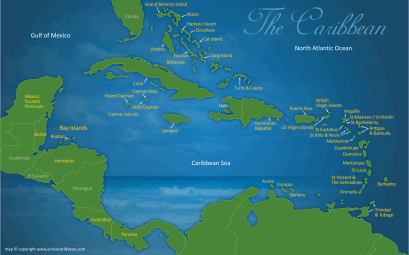
Two tiny countries,
two proud peoples, and one unique federation makes St.Kitts and Nevis a
very strong player among the Eastern Caribbean countries.
Separated by
a five mile strip of sea, and linked by ferries from the centre of Basseterre
in St. Kitts to the centre of Charlestown in Nevis, there are many differences.
Many of them to do with the rules and some of the customs governing the
purchase of land and property for both non-nationals and nationals.
Government
Owned Land
In this article
I will concentrate on St. Kitts and look at Nevis next time.
Much of the policies and decisions that the government of St. Kitts is
now making over the sale of real estate is a result of 300 years of sugar
planting, and all the economic, social, legal, cultural and geological
effects that impact a land over a third of a millennium.
A Member of
the regional OECS (Organisation of Eastern Caribbean States), and of the
larger Caricom, the Federation looks towards the end of 2005 and the advent
of Caricom’s Single Market Economy (CSME) with real hope for the future.
(ref: http://www.jis.gov.jm/special_sections/CARICOMNew/CSME1.html)
Growth in St.Kitts this year is expected to exceed 6%.
The 64 square
miles that constitute the island of St.Kitts has abundant rivers flowing
from the high rainfall that is collected on the central mountain ranges
and rainforests. And its this abundance of water that kept the sugarcane
fields rich and fertile.
In 1814 the
sugar plant in Basseterre began to manufacture sugar. It was built to consolidate
the production of sugar from the many plantations on the lower slopes of
the central mountain range of St. Kitts, and close to the harbour in order
to ship the sugar out on sailing ships (say that after you have had a couple
of cane sugar rums….) as efficiently as possible. Later on a railway was
built that circled the island and ran through all the major plantations,
collecting cane during the two harvests of the year. This railway has now
been turned into a wonderfully romantic way of seeing St. Kitts, aboard
a specially constructed train for viewing the countryside.
(Ref: http://www.stkittsscenicrailway.com/)
By the 1960s
the sugar cane plantations were in trouble. Trade Unions, private owners,
co-operatives and government finally worked out a nationalization agreement
in which all private plantations were bought out over a 20 year agreement
by the government owned St.Kitts Sugar Manufacturing Corporation. These
plantations included thousands of acres of sugar fields which became government
property. Within the agreement owners retained 50 acres of their lands
for farming. On the 31st of July 2005 the last cane was crushed and the
factory closed down, sugar manufacturing ceased in St. Kitts. This briefly
explains why so much land is owned and controlled by the Kittitian government.
As to what is going to happen with all of that land, if decisions have
been made then they have not been communicated to the populace, which is
another story told elsewhere. |
|
| Deb Andrews is with Caribbean
Land & Property - a company that has a very wide selection
of properties throughout the Caribbean including single family homes, raw
land, building lots, vacation homes, commercial & investment properties
as well as beachfront land - Caribbean Land & Property has real
estate across the Caribbean - Since this article was written Deb
Andrews has become the editor of the Caribbean Property & Lifestyles
Magazine - she can can be reached by
clicking
here |
|
|
|
The Caribbean Property List has current
Real Estate Listings on the Island of Nevis -
|
|
|
|
|
| This dynamic
Report is essential reading for anybody interested in the opportunities
that telecommuting, and in particular overseas telecommuting can offer.
Earning a living whilst living on an idylic Caribbean Island or in a Beachfront
Tropical Nation is for many of us the ultimate dream
This Report will
show you how you could actually go about translating this dream into a
reality. |
|
|
|
One interesting
fact has emerged though recently, the hundreds of years of planting and
cane sugar root systems have created an aquefer underneath Basseterre,
the capital of St.Kitts. Estimations are currently very broad, but millions
and millions of gallons of water have formed a huge reserve under the town,
an important natural resource, and if planting is not continued a resource
that is now finite.
The Marriott
Hotel which uses 1.3 million gallons a day mainly on the golf course has
its own RO, or reverse osmosis plant. New developments of this size will
also have to provide their own resources both with power and water since
the national systems were not built to cope with this level of useage.
The arid area
from Frigate Bay all the way to Nags Head the most eastern point of St.
Kitts was never planted. A few years ago Frigate Bay was set aside
for special tourist development by the Government, and a few high profile
investors courted. Some of these came through, including the Marriott Hotel
which built 1000 rooms, and a five star hotel of 300 rooms is scheduled
for completion by 2007. Other smaller tourism projects have been completed,
and new ones started.
|
|
|
|
Sugar
Workers
|
Sugar
Train
|
|
|
At present there
is only one very small ill-equipped marina in St. Kitts, but there is a
new development starting which will considerably increase the appeal of
stopping in St.Kitts for tourist charters out of St. Maarten/St.Martin,
Antigua or Guadelope. It will definitely put St. Kitts and Nevis on the
yachting map. About time too, this has been a long time coming, and there
is plenty of good sailing and anchoring in St. Kitts.
Cost Of
Land And Property
Land is not
cheap in St.Kitts, nor is property. We assessed a number of commercial
properties in Basseterre. For example, for a cool one million US dollars
you can purchase a detached building on the harbour front, opposite the
only marina in St. Kitts and the Nevis ferry dock, and only a short distance
from the huge cruiseship port, Port Zante built by Kuwaiti investors. Port
Zante is one of the only two ports in the whole of the Caribbean where
the Queen Mary 2 is able to dock, and she has visited eight proud times.
For one million
dollars you can buy an awful lot of potential and a great investment, but
not very much more. Upstairs there is a restaurant and 10 small hotel
bedrooms. The current Kittitian owners are more concerned with catching
up on their sleep during the hot, airless summer days in hurricane season.
Hotel guests, many of them from the Nevis ferry overnighting in St.Kitts
in order to catch an early morning international flight, are served breakfast,
but lunch and dinner are discouraged. There are other restaurants around
who can cater for those! Downstairs there is hardware shop, a tenant
with a renewable lease. “We’re tired”, says the owner, a beautiful tall
Monserratian of approximately 65 summers, married to a Kittitian who is
sleeping comfortably on the balcony overlooking the noisy, evening street
when we enter the room. “We have property in Nevis, we want to go live
there.”
In St. Kitts,
beaches below the high water line are owned by the government and are public
property. Above that, they can be private.
There is land
for sale on the slopes of the central mountain range, and beachfront away
from the madding crowd but it comes at a price. After all this country
is a tiny land resource, with a concomitant value which will only increase
with time.
The Financial
Investment
Finding property
or land is not that easy in St. Kitts, but you’ll be glad to know that
things do get easier once you have made your offer and the purchasing negotiations
with the seller are over.
Expatriates
buying real estate in St.Kitts can either go the Citizenship through Investment
route for investments over $250,000 (US) or apply for an Alien LandHolders
Licence. The Alien Landholders Licence is a negotiable thing and can be
as much as 10% of the property, and is best dealt with using local knowledge.
But best of
all…there is no personal income tax in St.Kitts.
In order to
encourage investment, especially with the closing of the sugar industry,
Corporate Tax Holidays are offered to potential investors and are often
negotiated most successfully through local partners. Under the Fiscal Incentives
Act, four types of enterprise qualify for a tax holiday, including no corporate
tax for fifteen years. The length of the tax holiday depends on the amount
of value added by the business to St. Kitts and Nevis.
Other incentives
include:
• relief from
customs duties and pier duties on items brought into the country for use
in the construction, extension and equipping of a hotel of not less than
10 bedrooms, can be given.
• special
tax relief benefits for a hotel proprietor who has been granted a license
under the Hotel Aid Ordinance. This stipulates that the gains or profits
of a hotel of more than 30 bedrooms are exempt from income tax for 10 years.
If the hotel contains less than 30 bedrooms, gain or profits would be exempt
from income tax for 5 years.
• companies
registered with the Federation of St. Kitts and Nevis can repatriate all
profits, dividends and imported capital.
• the Government
of St. Kitts and Nevis and the United States has entered into an Investment
Guarantee Agreement.
Land tax is
charged at various rates depending on the size and nature of the land concerned,
and whether they are in a Special Development Area such as Frigate Bay.
A house tax is charged at the rate of 5% of the annual gross rental value
for residences in St. Kitts with a 25% rebate for properties that are occupied
by their owner solely as residence. St. Kitts real estate and Nevis real
estate stamp duty is 12% for freehold and 5% for condominiums. Stamp duty
is payable by the seller only.
Open To Offers
With the closure
of the sugar industry this month, now, more than ever the government needs
to focus on new investment and long term jobs for the country. Certainly
one of these focus areas is massive expansion of tourism and developing
the infrastructure to cope with this. New hotels, inns, villas, marinas,
restaurants and all sorts of tourist based enterprises are being looked
upon with great favour at present, and there are some good possibilities
on the table. But introductions to local partners are the real guarantees
of success, and that’s true of many of the region’s small countries.
The airport
is relatively new, efficient and somewhat underused at the moment. The
runway of 8000 feet supports direct flights from Europe and North America,
and the landing path is mainly over the sea and does not effect residential
areas.
For around
$300,000 there are a number of 2-3 bedroomed homes with small gardens for
sale in the Special Development Frigate Bay area close to the major hotels
and golf courses. These are excellent investment for holiday rentals. There
are also a number of new estates and gated communities, and managed luxury
housing projects underway.
But if your
dream is verdant earth for tropical gardens and self sufficiency, look
towards the north west, under the cool, damp stewardship of the central
mountain ranges. Somewhere in amongst acres and acres of unhusbanded sugar
cane, is the Garden of Eden.
|
Deb Andrews
and
her husband Stewart sold their home in a remote villiage in the Yorkshire
Dales, England in 1985 and with their two children started to sail in the
Caribbean and Europe on a 45 ft steel yacht called the Safara that
Stewart built. After sailing from Trinidad to Puerto Rico, they fell in
love with the Caribbean sky and sea and decided to stay. Their children
were home schooled for the first four years in the Caribbean and then returned
to England to finish secondary school and university. To survive in the
Caribbean, Deb and Stewart worked in the British Virgin Islands administrating
a private plastic surgery clinic and managing huge civil construction projects
with EU and British funding. In their free time they sailed the Eastern
Caribbean. They are now planning to settle down in the mountains of Dominica.
- Since this article was written Deb Andrews has become the
editor of the Caribbean Property & Lifestyles Magazine - she can can
be reached by
clicking
here |
,
, |
|
|
|
|
|