ince
1999, when Hugo Chavez first became president of Venezuela, the country
has been clouded in mystery and intrigue. Chavez' socialist agenda
and ongoing theatrics with Cuban dictator Fidel Castro and U.S. President
George Bush have sent up red flags regarding Venezuela all over the democratic
world. In spite of all the political posturing and bloviating in
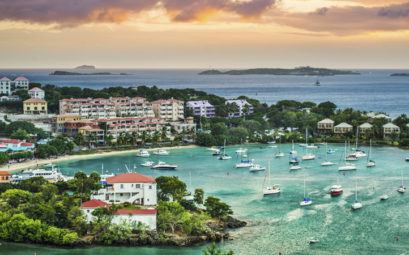
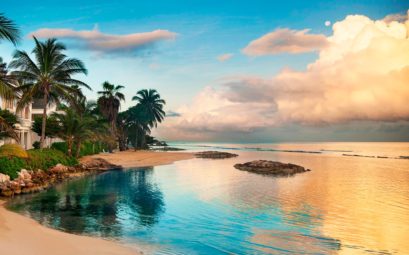
the media, the country remains one of the most unspoiled vacation destinations
in the world, whether visiting the beaches, mountains, Amazon, or plains.
It also remains one of the best countries to get more bang for your dollar,
whether buying real estate, or just eating dinner out. The most recent
background information on the political and econmomic situations in Venezuela
will surprise a lot of readers and challenge their perceptions that this
is a "communist" country or that the future of this place is bleak...
"A disastrous two-month national
oil strike from December 2002 to February 2003, temporarily halted economic
activity. The economy remained in depression in 2003, declining by 9.2%
after an 8.9% fall in 2002. Despite continued domestic instability, output
recovered strongly in 2004, aided by high oil prices." (from "The CIA Factbook").
The political situation is now stable again, after two or three years of
unrest. The most surprising development is that the economy is now
booming due to these higher oil prices.
According to
a recent issue of "The Economist", "Emerging-market indicators show that
Venezuela is the fastest growing country in the world. GDP growth is up
11.2% year-on-year change (as of 2005 figures), and it is the only country
in the world which registered double digit growth rate." (China, the second
highest, kicked in at 9.5%, imagine that!)
Even more impressive, industrial
production is up 23.1%. That's mostly local money. As a result,
confidence is high locally, hence the political calm. Instead of
taking money out of the country, local business leaders and government
are keeping it in and putting it into things like manufacturing, expanding/upgrading
infrastructure, and controlling prices (97 octane gasoline is US 11 cents
a gallon, for example). Comparing the second highest country on the
list, China, their industrial production is up only 14.4%. Everywhere else
in the world has lower growth rates.
The trade balance is currently a
positive $22.1 billion. That's A LOT OF MONEY for a country with a population
of only 26 million people. In comparison, China -- with over a billion
people and the highestexport level in the world -- clocks in at a comparable
$51.0 billion.
As for Chavez and any perceived anti-American
attitude, it has been at least partially caused by the US government and
it's policies from what I've been able to research on the subject, as well
as from speaking with the locals on my four trips through the Caribbean
coast of Venezuela since April, 2005. The Chavez government was against
the wars in Afghanistan and Iraq. However, we know many other countries
were also against these wars, some of them supposed allies of the USA.
Of course, the way this was covered in the US media and responded to by
the Bush government shined a dim light on US-Ve. relations.
I have read many articles online
(a simple Google search will bring up at least a dozen, there's too many
to quote here) that the US was aware of the coup that briefly suspended
Chavez' presidency well in advance of its happening and, that at the very
least, supported it's happening from a political viewpoint if not actually
involved. CIA documents have been released to the public that show
a US naval vessel was standing by in the Caribbean in case there was a
need to evacuate US nationals from the country after the coup or it's attempt.
That shows knowledge of the situation in advance. Congress and the
CIA have also been funding at least one of the opposition parties in Venezuela
that were involved in the coup attempt. This is also public knowledge
and shows more involvement even if only an indirect link can be established.
I'm not passing judgement on US government policy, but I believe it's easy
to understand some resentment on the part of Chavez and his regime. |
|
Don Ellers is a co-owner
of Best Beach Escapes - a company created to assist international clients
to
visit or purchase property in what
some believe could be considered the ultimate undiscovered Caribbean destination.
Best Beach Escapes was started only after the founders had travelled the
world looking for the perfect place to live and invest. Originally from
the UK, they now reside permanently in Venezuela, and have an International
Team that can help you in all aspects of finding and buying your dream
property. |
Best
Beach Escapes
|
|
.
...
|
.
In spite of this deterioration of
US-Venezuelan relations, the people in the country have remained very friendly
towards the Americans visiting their country. I found no bad attitudes,
resentment or maltreatment of any kind directed towards my family and me.
I made the first trip with my wife and six-year-old son. We drove
three hours or more from the Maquetia airport, through Caracas and down
the coast to San Jose de Rio Chico, where we stayed at the Isla de Oro
condominiums for three days. We traveled two and a half hours more
from there to Puerto La Cruz by car for the ferry to Margarita Island,
about a two hour boat ride, and then spent three days on the island before
flying back to Caracas. We were in country a total of eight days
and covered hundreds of miles at the very least and met scores of people
in both metropolitan and rural areas. All were warm and helpful.
No problemas. Since then, we've spent a total of about two months
more on our last three trips there and have only good things to say about
the Venezuelan people and their attitude toward foreigners.
.
| Real Estate
In Venezuela
This property
was chosen from the website of Best Beach Escapes - which is the
website of Don Ellers, the author of this article on Venezuela.
- - This beautiful Mediterranean Style Property is
situated between a stunning lagoon and the Caribbean Sea just a couple
of hours drive from the Capital. With four bedrooms, three bathrooms,
and panoramic views. The building occupies 135 square metres and the total
land area is 375 square metres. The Price... Just under US$48,000
with full title and land!! Best
Beach Escapes Website - |
|
.
Also, to eradicate any perceived
anti-American perception, Chavez has put in place much tougher penalties
for any crimes against foreigners in general and Americans in particular.
The national guard has beefed up patrols on roads that had been known for
vehicles being stopped and occupants robbed in years past. I have
friends from Arizona and Texas that live in Venezuela full time.
They feel safe enough that they've traveled by car through at least twenty
different states in the country and many places they've gone are very remote.
Needless to say, crimes against foreigners are becoming rare.
We must also remember that the United
States buys about 50% of what is exported from Venezuela, including 80%
of their oil. Almost 30% of what is imported in Venezuela comes from
the US. This makes the USA by far the largest trade partner Venezuela
has. Chavez isn't going to screw that up and drive his economy totally
into the ground. Bush isn't going to screw it up and lose a major
oil source. The two countries will continue to do business as usual,
despite the political undercurrents and posturing of the day. As
you could see, the USA being Venezuela's major import and export partner
is one of the main factors that will always keep the two countries bound
together. Chavez is trying mightily to reverse the flow of international
investment money out of the country that began several years back.
He's begun to stem that flow and bring new investment into Venezuela.
This includes real estate investment. He knows that is crucial to
keeping the economy going in a positive direction.
From the investors angle, although
the "up cycle" seems to have started, property prices are still at a historical
low and the currency exchange, which was around 680 Bolivars to the dollar
in 2000 after Chavez took office (CIA Factbook), is now 2,150 to one and
fixed by the government. That's the official rate, you can
exchange dollars privately and receive between 2,400 to 2,700 Bolivars
to the buck, depending on the amount you exchange. The low prices
and high exchange rate combine for a great opportunity to buy. This
is the time all offshore investors look for, prices haven't risen much
but the economy is taking off. It's early-in right now in Venezuela.
Foreigners can directly own real
property in Venezuela the same as a citizen can. No Venezuelan corporation
or fideicomiso (bank trust, as in parts of Mexico) is needed, although
you could set up a Venezuelan corporation and buy through it if that's
what helps your personal situation. Another fact makes the coastal
area of Miranda state, which includes hundreds of miles of both gorgeous
coastline and natural canals, particularly attractive to investors.
We all know the tourist Mecca in
Venezuela has been Margarita Island for many years. Previous governments
have pumped much money into developing and marketing the island.
However, due to present day politics, this has been changing. It
turns out that the governor of Nueva Esparta, the state that Margarita
is in, is of the opposition party, not Chavez' party. Their differences
run deep enough that Chavez is no longer concerned with further development
and promotion of Margarita. The governor of Miranda state, where
Rio Chico and Isla de Oro is located, is a former vice-president of Chavez.
Between them, they want to make the Caribbean coast of Miranda the next
tourist capital of Venezuela. If you've visitied Margarita Island
lately, you may have noticed that it doesn't shine like it once did.
Times are changing for Caribbean Venezuela.
OK, some more about the area.
The Caribbean coast of Miranda is the most beautiful stretch of coastline
in the country. It's also perfectly situated as the most convenient
to get to from Caracas at an hour to an hour and a half from the city's
eastern border, depending on traffic. The new highway, which is already
under construction, will cut the drive time in half. Location, location,
location. Maiquetia international airport (CCS/Caracas), now
known as Simon Bolivar International, is located about 20-30 minutes from
the northern border of Caracas, however, the national airport in Higuerote,
Miranda is to be expanded to an international airport according to the
national government. Higuerote is presently about twenty minutes from Rio
Chico and on the same stretch of coast, but the completion of the new highway
will bring the travel time down to around ten minutes. This is a rare,
pristine and little developed area at present. Venezuela is a true
unspoiled paradise, with more Caribbean coastline than any other country.
It should remain this way also, with President Chavez restricting development
along the shore and creating thousands of acres of new nature preserves.
Venezuela is world famous among big
game fisherman. Rio Chico one of the three top fishing areas in the
country, legendary for it's tarpon and snook. There is also brackish water
in the canals where certain species native only to the area are found.
Various areas of the coast are also famous for a variety of other big game
fish, including white marlin. The canals and rivers are also a fisherman's
dream. There are many small fishing villages built along them where
the people make a living from the waters' bounty, much the same as they
did hundreds of years ago. That tells me something. Did I mention
jumbo shrimp? For other sportsmen, a five minute ride by car or by
boat down the canals brings you to a great golf course.
I own a condo at Isla de Oro, in
Rio Chico. It was one of a kind when built and still is today.
Nothing like it can ever be built again anywhere on the beach in Venezuela
due to new building codes on the coast (la ley Costanera). Nothing
new can be built that's higher than several floors on the waterfront.
Isla de Oro has three residence towers that soar to 14 stories, making
the views the most incredible that will ever be found in the area.
It's also the only sizable residential development that exists anywhere
near the town and that is directly on the Caribbean. With the
sea in front and the marina adjoining over a hundred miles of natural canals
to the rear of the property (the area of Los Canales), much of the perimeter
is waterfront. Because there is water front and rear, all apartments
are waterview and have at least a partial view of the Caribbean itself.
Isla de Oro was built by a former
president of Venezuela in 1980 as a playground for the rich and famous
of their country. After the economy started to tank and the former
regime fell out of power, many original owners left and the condo suffered
some years of neglect. A new group of owners, both locals and many
foreigners, along with a new condominium board, have been restoring the
development and plan to bring it back to the five star resort it once was
when originally constructed. The intent of the new group is obvious
when you see how the common areas have been restored. The pools,
restaurants, reception, and most of the common areas are beautiful again.
What's left to be done is a facelift to the facade and interior hallways,
and renovation of some units that were left unoccupied over the years.
Prices are extremely low due to the "pre-renovation" situation. Because
many units are still in good condition, it's possible to buy in for less
money than any off-plan deal anywhere in the Caribbean and use or rent
your apartment immediately without having to wait for construction, like
off-plan. Studio units in good shape are selling from US$20K.
One and two bedroom units are also available, as well as the occasional
penthouse and villa. For the more intrepid investor, there are some
units available that need a total overhaul and are priced lower.
With labor in Latin America being US$5-7 dollars/day, even these basket
cases are being snapped up quickly. Priced according to size and
condition, Isla de Oro offers the lowest prices anywhere on the Caribbean
Sea for a resort with it's features.
Prices for real estate in the area
outside of Isla de Oro, in Los Canales, are also impressively low.
There are about a half dozen condo developments on the canals, and a variety
of homes of all sizes that are for sale. You can buy a house on the
canals within a short walk to the beach from $US mid 20s to 70sK depending
on size and condition. Many of the homes for sale in this area are
inside gated communities. My good friends Lawrie and Rachel from
England recently purchased a 4br/4ba home with pool, that needs only little
cosmetics, for US$45K. For more information on Isla de Oro and properties
in Los Canales, please visit our webpage Best Beach Escapes (As listed
above in the about the author sidebar). Many examples are
posted with photos and prices and I can be contacted by e-mail directly
through the site. I can also be reached directly at this e-dress:
DonIron@netscape.net.
When e-mailing, please let us know you saw this article online at CaribPro.com.
My partners Phil and Cat Winstanley, who live at Isla full time and do
the legwork finding new properties for sale, can also be contacted through
the Best Beach Escapes website.
Prices for anything in the area are
amazing. A pack of cigarettes costs about a dollar. A bottle
of very good Cacique rum, the most popular national brand, costs about
three bucks. On a more modest budget? You can buy a liter of
the cheap stuff for a dollar. A can of beer sets you back forty cents.
We hit one of the nicest restaurants in Rio Chico, La Tabernita, and I
had the Lomita de Res dinner, the local equivalent of filet mignon, for
about five bucks. It was the most expensive thing on the menu and
delicious. The restaurants on the condo premises can bring you a
full meal for two to three dollars.
Between the natural beauty of Venezuela
and what can be bought with American dollars in the country, I was sold
immediately. I have been researching emerging markets in Latin America
and the Caribbean, as well as traveling to them to search out properties
for years. I've been to Mexico, Panama, Nicaragua, Colombia, and
the Bahamas. Nowhere have I found lower prices, an "earlier-in" time
for investing, a better exchange rate or more beautiful beaches.
You owe it to yourself to visit.
..
..
,
|